
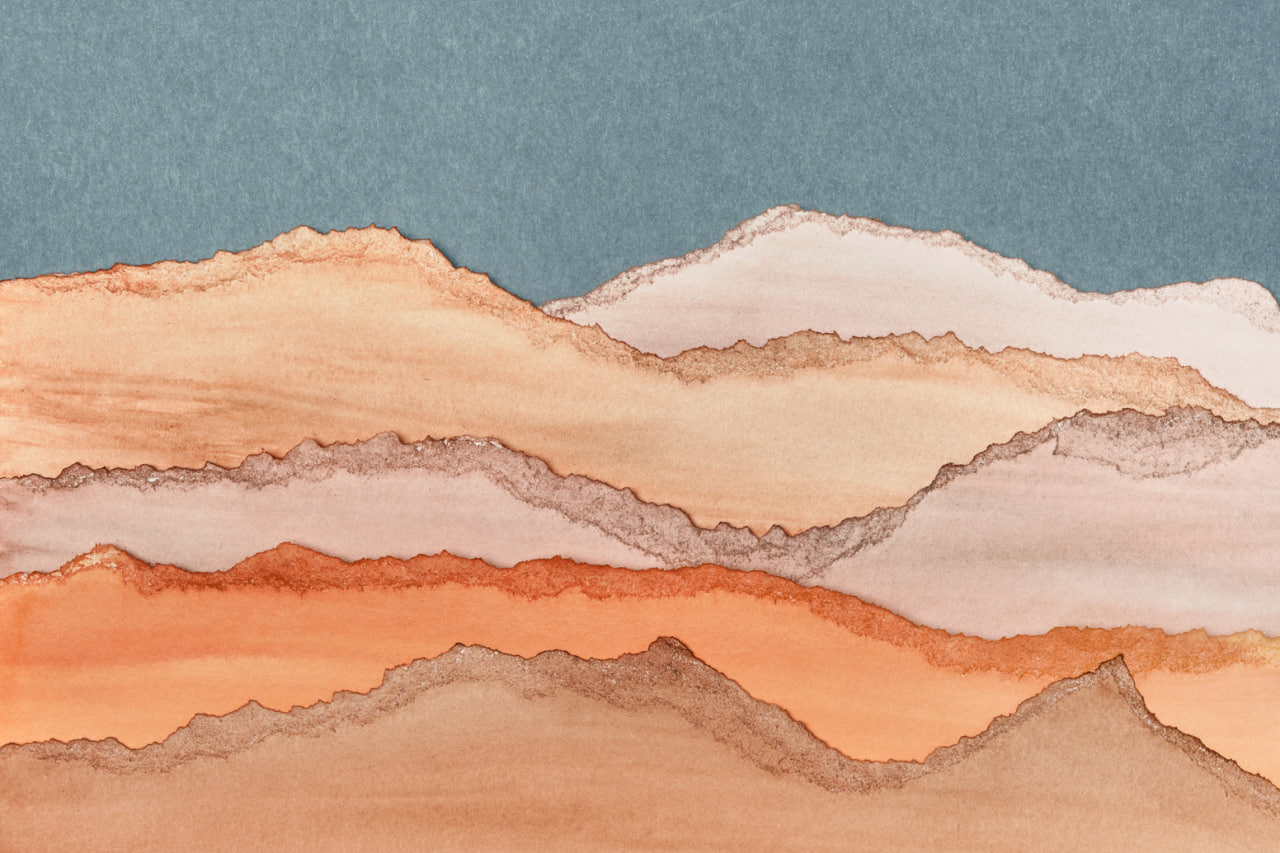
Understanding Water Control in Watercolor Landscapes
Water control is one of the most important and challenging aspects of watercolor landscape painting. Unlike other mediums, watercolor is shaped not only by pigment and brush, but by the movement, absorption, and evaporation of water on paper. Learning to manage water effectively allows artists to create soft skies, glowing light, atmospheric distance, and expressive natural textures without losing clarity or control.
For many beginners, watercolor feels unpredictable. Paint spreads when it is not expected to, edges dry unevenly, or colors become dull and muddy. These issues are rarely caused by poor color choices or weak drawing skills. In most cases, they are the result of misunderstanding how water behaves at different stages of the painting process. Mastering water control transforms watercolor from a frustrating medium into a responsive and expressive one.
The Relationship Between Water, Pigment, and Paper
Watercolor landscapes are built on a three-way interaction between water, pigment, and paper. Each element affects the others, and ignoring one leads to imbalance.
Water carries pigment across the paper. The amount of water on the brush, combined with the moisture already present on the paper, determines how far and how fast the paint will travel. Paper texture and absorbency influence how long the surface remains workable and how sharply or softly edges appear. Understanding this relationship helps artists predict outcomes instead of reacting to accidents.
Cold-pressed paper, commonly used for landscapes, holds water longer and allows smoother transitions. Hot-pressed paper dries faster and produces sharper edges. Rough paper encourages broken textures that work well for foliage and stone. Choosing the right paper and adjusting water accordingly is a foundational skill.
Wet-on-Wet Technique and Soft Transitions
The wet-on-wet technique is essential for creating skies, distant mountains, mist, and reflections. It involves applying paint to a damp or fully wet surface, allowing colors to blend naturally.
Successful wet-on-wet painting depends on timing. If the paper is too wet, paint becomes uncontrollable and blooms excessively. If it is too dry, hard edges form and blending becomes difficult. The ideal stage is often described as a surface that looks slightly shiny but has no visible puddles.
In landscapes, this technique is especially useful for creating smooth gradients in skies and water. Light pressure, minimal brush movement, and patience are key. Overworking a wet surface disrupts pigment flow and leads to uneven textures.
Wet-on-Dry Technique and Structural Control
Wet-on-dry painting involves applying wet paint onto a dry paper surface. This technique provides clarity, precision, and definition, making it ideal for foreground details, tree branches, buildings, and textured elements.
Water control here focuses on brush moisture rather than paper moisture. A brush that is too wet causes paint to spread uncontrollably, while a brush that is too dry creates scratchy marks. Finding the balance allows artists to place confident, intentional strokes.
In watercolor landscapes, wet-on-dry techniques are often layered over earlier wet-on-wet washes. This contrast between soft backgrounds and sharp foregrounds adds depth and visual interest.
Understanding Moisture Stages of Paper
One of the most useful skills in watercolor is recognizing the different moisture stages of paper. Each stage offers different possibilities.
Fully wet paper allows maximum flow and blending but requires restraint. Damp paper offers controlled softness and is ideal for shaping clouds or distant hills. Almost dry paper produces textured edges and subtle variations. Completely dry paper is best for crisp details and final accents.
Learning to pause and observe the surface before applying paint prevents many common mistakes. Rushing from one stage to another often results in unwanted blooms or harsh edges.
Water Control in Skies and Atmospheric Effects
Skies are often the largest and most expressive areas in watercolor landscapes. Poor water control in the sky can affect the entire painting.
A well-controlled sky wash usually begins with clean water applied evenly across the area. Pigment is then introduced gradually, allowing gravity and moisture to create natural transitions. Tilting the paper helps guide the flow and prevents streaking.
Cloud shapes emerge through timing rather than force. Lifting paint at the right moment or introducing slightly drier pigment creates soft cloud edges without harsh outlines. Excessive brushing disrupts the wash and flattens the atmosphere.
Managing Water for Foreground Textures
Foreground elements such as grass, rocks, and trees require a different approach to water control. These areas benefit from less moisture and more intentional brushwork.
Using thicker paint with less water creates stronger color and texture. Dry brush techniques, achieved by removing excess water from the brush, produce broken marks that suggest detail without overworking the surface.
Controlling water in the foreground helps maintain contrast and prevents important details from dissolving into the background.
Common Water Control Mistakes and How to Avoid Them
Many watercolor landscape issues come from using too much water too late in the process. Adding wet paint onto an area that is already drying often creates backruns and blooms.
Another common mistake is inconsistent moisture across large washes. Uneven wetness leads to streaks and patchy transitions. Pre-wetting evenly and working quickly reduces this problem.
Overcorrecting is also harmful. Attempting to fix a wash while it is drying usually makes the problem more noticeable. Knowing when to stop and let the paper dry is a crucial part of water control.
Developing Sensitivity Through Practice
Water control is not about strict rules but about sensitivity and observation. Each paper brand, brush, and environment behaves differently. Humidity, room temperature, and even the angle of the paper affect results.
Regular practice with simple landscape studies builds familiarity. Exercises focused on gradients, wetness stages, and controlled washes are more effective than complex compositions in the early stages.
Over time, artists develop an intuitive understanding of when to add paint, when to wait, and when to let water do the work.