
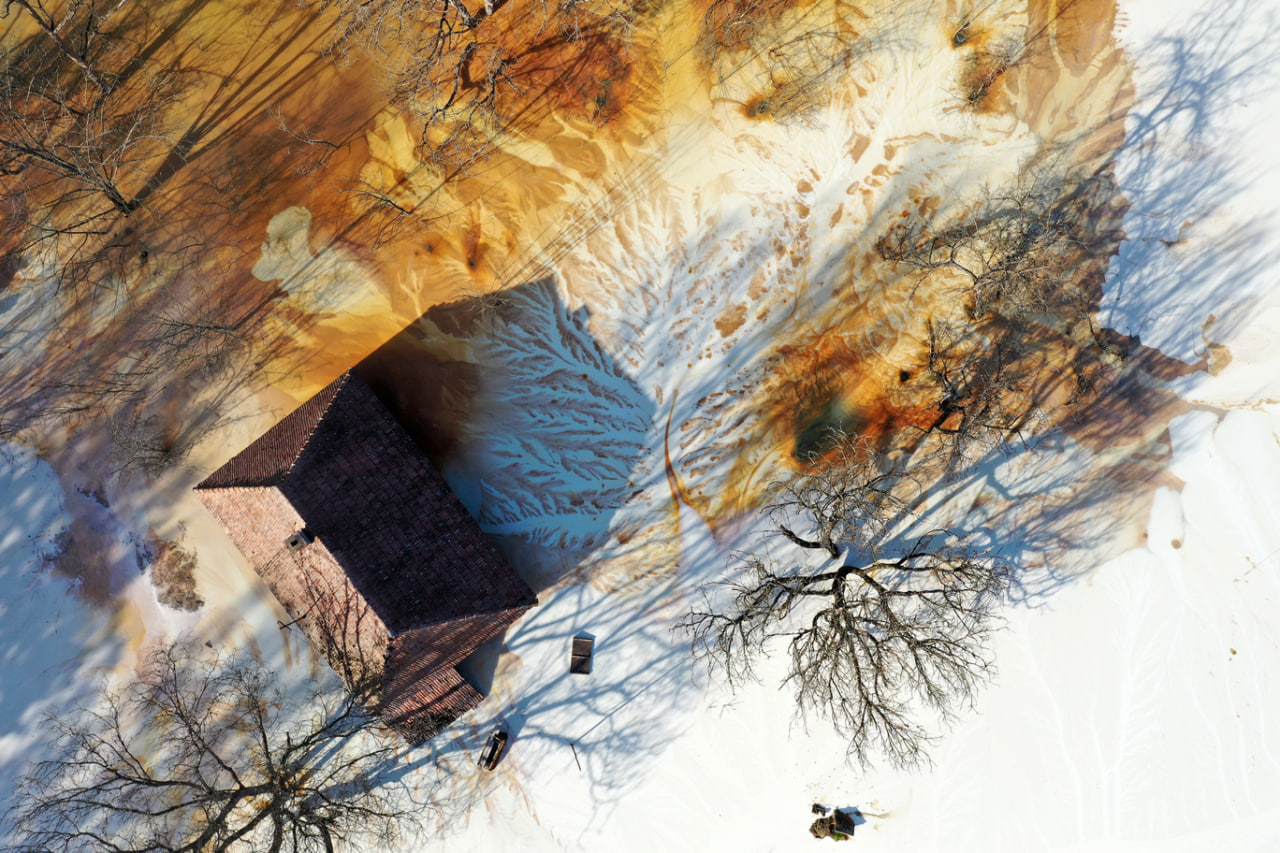
Capturing Depth and Mood in Landscapes
Just as form gives an object its three-dimensional appearance, depth and atmosphere give a two-dimensional landscape its credibility and presence. And while we might initially think that details help create depth and atmosphere in a watercolor landscape, it’s actually achieved through the careful management of value, color, edges and composition. If depth is managed effectively, the viewer will feel the distance, air and even light as it travels through the painting.
It is common to see a beginning student painting a tree, a house and a mountain, but the painting still looks flat. This is usually because everything is painted at full strength. By knowing about depth and atmosphere you are able to lead the viewer’s eye and create a space that looks real.
Atmospheric perspective refers to the way objects in the distance appear to fade into the sky, due to the scattering of light by atmospheric particles. It’s a key element to consider when composing landscapes. You can use it to create depth in your paintings, making objects seem farther away. This effect also gives the impression of mistiness or fog, which can add character to your work.
Aerial perspective is the phenomenon in which depth can be seen in the distance. Things in the distance appear lighter, cooler, and less detailed. This occurs because air and moisture sit between the observer and objects in the distance.
Atmospheric perspective can be quite dramatic with watercolor because it lends itself to the tools of the medium. Far away mountains are usually painted with thinned paint and low contrast to push them back. Closer elements are pushed forward by increased value and definition of form.
Understanding this move from the background to foreground is important for constructing convincing depth.
Controlling value is what I consider the root of depth.
The importance of value (lightness and darkness) in painting for depth is more significant than color. A painting with good value will appear deep even with a narrow color range.
A long-distance view would normally have a relatively limited tonal range with less in the way of dark shading. The mid-distance will have more contrast and the foreground should have the darkest shadows and brightest highlights. In this way the contrast is stepped up and leads the eye into the picture.
Value planning is also important for watercolorists since it’s easy to flatten a painting if this step is ignored; a light pencil drawing or a quick value sketch can help with this.
Color temperature and atmosphere.
Color temperature plays a huge role in setting the mood. Blues, purples and cool greens will seem to step back while yellow, reds and warm browns will seem to step forward.
Things further away in a landscape tend to fade to cooler, less saturated colours regardless of their local colour. This creates the illusion of distance without the necessity of drawing everything in.
Color temperature also affects the atmosphere. Cool, muted colors result in a tranquil, overcast setting, and warmer colors indicate sunshine, dryness, or that the scene takes place in the late afternoon. By using temperature to our advantage, we can convey a sense of place as well as mood.
Edge Control and Spatial Clarity
Edges are one of the most underutilized techniques for suggesting depth. Not all edges in the landscape are sharp. The more distant forms are soft due to atmospheric conditions and objects in the foreground have harder edges.
Soft edges come easily with watercolor, especially when wet on wet is used. Let the background wash softly merge with other areas. Save hard edges for emphasis and interest.
Managing edges keeps the whole painting from clamoring for attention, and also enhances the illusion of space.
The use of glazing techniques can add depth to a watercolor painting, but it is essential to remember that the buildup of layers will affect the final result. In watercolor, transparency is key. If you’re working from dark to light, make sure to save the white areas and gradually build up to the lighter shades. When layering, keep in mind that each additional layer will shift the color, so plan accordingly.
Layering (or glazing) is crucial for establishing depth in a watercolor landscape. The transparent nature of watercolor permits previously painted layers to glow through, adding depth without density.
In many cases, far away features are painted early on using thin, light washes. As you progress, more layers add depth and detail to mid and fore ground areas. Allow each layer to dry before adding the next to keep things sharp.
If you try to push the layers or if you apply the paint too thickly too soon, you risk flattening the effect and jamming the landscape up.
To apply Scale and Overlap:
Scale and overlap are basic but useful tools for implying depth. A big object is closer than a small one, and a simplified object is farther away than a detailed one.
Overlapped shapes will also indicate space. If one shape overlaps another, the observer will know that one shape is closer to them. For example, in a landscape, the trees may overlap the hills, or the foreground foliage may overlap the path in the midground.
Simple shapes far away supports the illusion by putting detail only in the foreground.
“Direction of light and atmospheric effects.”
To support the cohesiveness of the scene and communicate depth, it is desirable that light consistently comes from the same direction. Shadows cast from a consistent direction increase the perception of three-dimensionality and spatial reasoning.
Mist, fog, and rain all reduce contrast and detail. In a watercolor painting, this can be achieved by lifting out, using soft washes, or by gently blending edges while the painting is still wet.
These tricks can be especially useful for morning or distance shots and can greatly enhance the sense of atmosphere and distance.